26 Jun 2026
Charting Digital Payment Routes That Turn Free Play into Live Dealer Tournament Edges Across Blackjack Variants
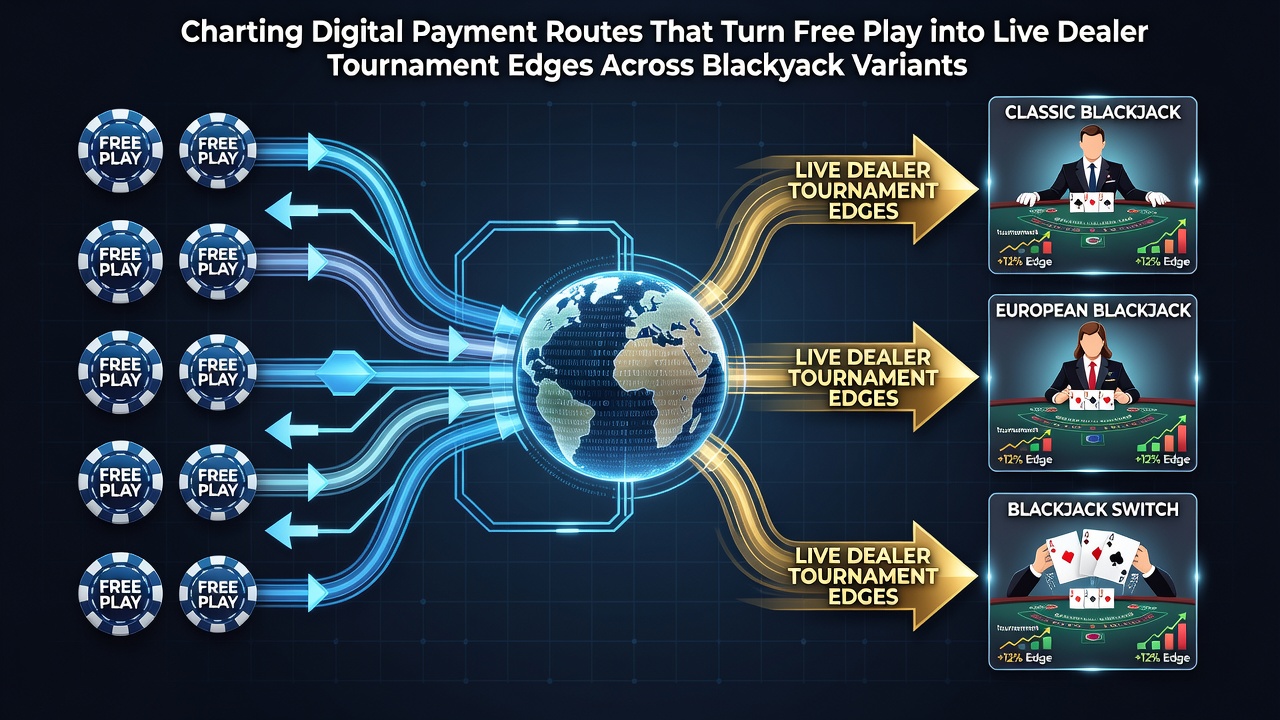
Digital payment systems now link practice sessions directly to live dealer events across multiple blackjack formats, allowing participants to convert trial play into competitive advantages through structured transaction pathways. Platforms integrate wallets and bonus mechanisms that track performance metrics from demo rounds into qualification brackets, with data showing seamless transfers that maintain player progress across variants such as multi-hand tables and side-bet options.
Tracing Transaction Flows from Practice to Competition
Payment processors handle conversions where free credits earned in demo environments convert into entry fees or stack builders for real tournaments, and these routes rely on secure APIs that update balances in real time. According to reports from the Nevada Gaming Control Board, transaction volumes in mobile gaming segments rose steadily through 2025, reflecting broader adoption of flexible funding tools that support both practice and live play. Observers note that such systems reduce friction by allowing users to deposit minimal amounts that unlock higher-stakes brackets once performance thresholds are met.
Those who've examined platform architectures find that digital wallets often embed loyalty tiers, where accumulated free play points trigger automatic upgrades to tournament invites. This process connects directly to live dealer feeds, ensuring that strategies refined during trial modes carry over without resetting progress indicators. Research from the University of Nevada, Reno gaming studies program indicates that participants using integrated payment routes achieve consistent advancement rates when moving between variants, particularly in environments that blend infinite-deck mechanics with finite-shoe formats.
Variant-Specific Edges Built Through Payment Integration
Blackjack modifications like switch rules or progressive side bets gain distinct advantages when payment flexibility aligns with bracket scheduling. Systems route funds to support rapid switches between table types, letting players test variant tactics in low-risk modes before committing resources to live events. Data from industry analyses reveals that networks employing these methods see higher retention in tournament series, as users leverage early deposits to secure seeding positions ahead of scheduled draws.
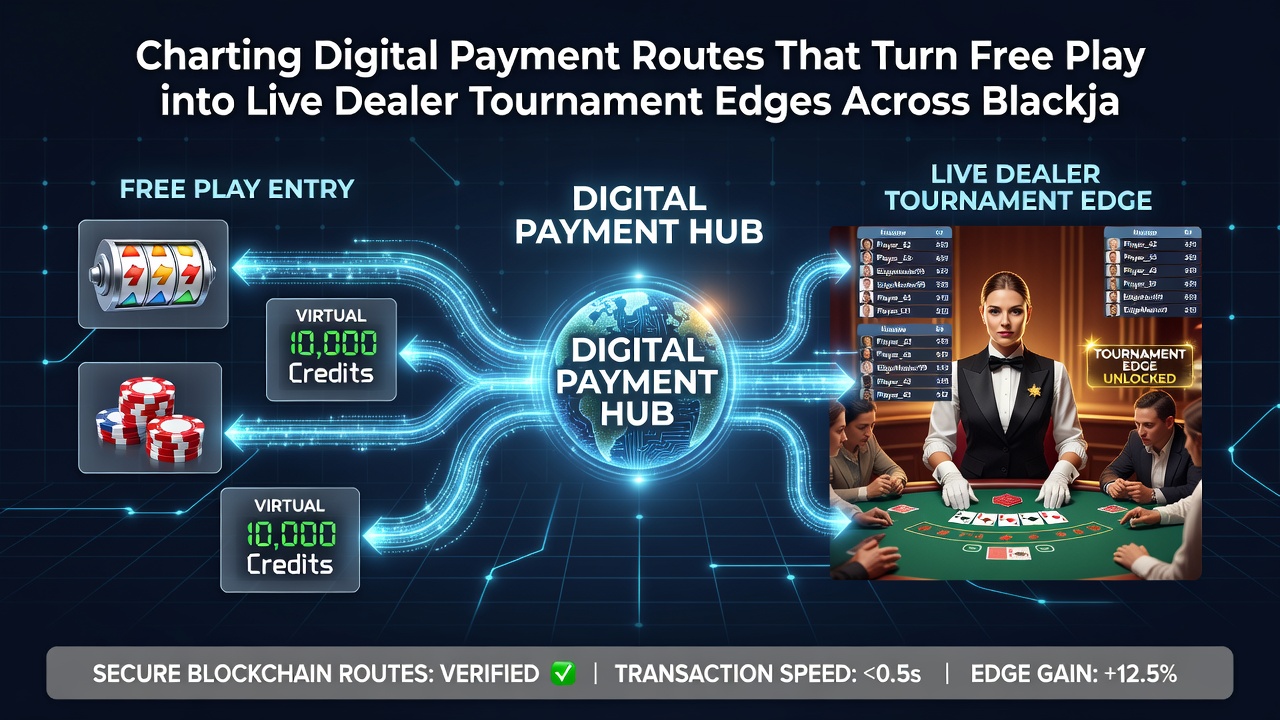
Live dealer environments benefit further because payment confirmations sync with dealer interactions, enabling real-time adjustments to bet sizing based on prior free play outcomes. Experts tracking these patterns across European and North American platforms report that June 2026 updates to certain regulatory frameworks are expected to standardize cross-border wallet compatibility, which could expand access to variant-specific leaderboards. This development builds on existing infrastructure where bonuses tied to practice sessions directly influence qualification odds in multi-table formats.
Network Schedules and Bracket Qualification Mechanics
Scheduled events on networked platforms use payment history as a filter for entry, with systems automatically validating routes that began in free play modules. Participants who route small initial transactions often unlock expanded bracket access, allowing them to apply honed tactics from one variant to another without separate funding steps. Figures from the Australian Communications and Media Authority gaming oversight reports highlight similar patterns in regional mobile markets, where adaptive payment options correlate with increased participation in live dealer series spanning different rule sets.
One study revealed that platforms incorporating these routes experience measurable lifts in completion rates for tournament cycles, as the pathways eliminate redundant verification steps between practice and paid rounds. Observers tracking these flows emphasize that the mechanics favor users who monitor their digital transaction logs closely, since accumulated edges from early sessions translate into position advantages during final tables.
Conclusion
Digital payment routes continue to reshape how free play transitions into competitive edges across blackjack variants, with live dealer tournaments serving as the primary arena for these conversions. As systems evolve toward greater interoperability by mid-2026, the documented patterns suggest sustained growth in integrated mobile environments that connect trial performance directly to live outcomes.